Many people know narrowband phototherapy as a treatment for skin conditions like psoriasis or vitiligo. While it’s incredibly effective for those, its true potential lies beneath the surface. This therapy works by addressing one of the core drivers of many autoimmune diseases: an overactive immune response. By using a precise wavelength of light, it helps reduce systemic inflammation and calm the very cells that are causing the problem. This is why it’s being explored for a range of conditions beyond dermatology. This targeted approach gets to the root of the issue, offering relief that’s more than skin deep.
Key Takeaways
- Targets the Root Cause of Inflammation: Narrowband phototherapy uses a specific wavelength of light to calm an overactive immune system, addressing the underlying inflammation that drives conditions like psoriasis and eczema, rather than just masking symptoms.
- An Effective Path for Stubborn Skin Conditions: This therapy is a proven option for managing psoriasis, eczema, and vitiligo, especially when topical creams haven’t provided enough relief, by slowing rapid skin cell growth and encouraging repigmentation.
- A Prescription and Safety Protocols Are Non-Negotiable: This is a medical treatment that requires a doctor’s prescription to ensure it’s right for you. Following your prescribed schedule and always wearing the provided UV-blocking goggles are essential for safe and effective results.
What Is Narrowband Phototherapy?
So, what exactly is narrowband phototherapy? Think of it as a highly targeted and therapeutic form of light treatment. It uses a very specific, concentrated wavelength of ultraviolet B (UVB) light to address health conditions, particularly those related to the skin and immune system. For years, it has been a trusted tool for dermatologists managing chronic conditions like psoriasis, eczema, and vitiligo. It’s a non-invasive treatment that harnesses the healing power of light in a controlled, precise way, often done right in a clinic or even from the comfort of your home with a prescription device.
The “narrowband” part of the name is what makes it so effective. Unlike older, broad-spectrum UV treatments or even natural sunlight, this method isolates the single most beneficial wavelength of light for healing. This precision allows the therapy to work its magic while minimizing exposure to other, less helpful UV rays that can cause burning or other side effects. This focused approach makes the treatment both efficient and gentle, offering a powerful option for anyone looking for innovative treatment options to manage persistent immune-related conditions that haven’t responded to other therapies.
How Narrowband UVB Light Works
At its core, narrowband UVB light works by calming an overactive immune response where it starts. In many autoimmune conditions, the immune system mistakenly attacks healthy cells, leading to inflammation and other symptoms. This light therapy gently penetrates the skin and interacts with the immune cells, essentially telling them to stand down.
This interaction helps to significantly reduce inflammation and, in the case of skin conditions, slows the rapid production of skin cells that causes plaques and patches. By directly influencing the behavior of these immune cells, narrowband UVB helps restore balance to your system, providing relief right at the source of the problem.
What’s Special About the 311-313 nm Wavelength?
You might be wondering why this specific wavelength—311 to 313 nanometers (nm)—is so important. Through extensive research, scientists identified this tiny sliver of the UVB spectrum as the therapeutic sweet spot. It’s considered the most effective part of natural sunlight for treating skin disorders, delivering powerful results without the extra exposure to less beneficial or potentially harmful wavelengths.
This level of precision is a game-changer. It maximizes the treatment’s healing potential while reducing the risk of side effects like burning. For example, studies show that patients with vitiligo often experience a higher rate of repigmentation with narrowband UVB compared to other treatments. By isolating the most impactful wavelength, the therapy offers a smarter, more targeted approach to healing.
What Conditions Can Narrowband Phototherapy Treat?
Narrowband UVB phototherapy is a well-established treatment, but many people only associate it with a few common skin issues. While it’s a go-to for dermatologists treating conditions like psoriasis, its applications are much broader because it addresses a key trigger in many autoimmune conditions: an overactive immune response. The therapy works by using a very specific wavelength of light to calm immune cells in the skin. This targeted action helps reduce inflammation and slow down the rapid cell turnover that causes plaques, patches, and discomfort.
This isn’t just a surface-level fix. By getting to the root of the problem, narrowband UVB can provide lasting relief for a range of issues. It’s a trusted option for chronic skin diseases, pigmentation disorders, and even persistent itching caused by systemic health problems. For many, it represents a powerful alternative or complement to topical creams and systemic medications, offering a way to manage symptoms without the side effects that can come with other treatments. It’s a versatile tool that gives patients and their care providers more control over managing chronic conditions. Let’s look at some of the primary conditions where this therapy has proven to be effective.
Soothing Psoriasis and Eczema
If you live with psoriasis or eczema, you know how frustrating the cycle of inflammation can be. Narrowband UVB therapy offers a way to break that cycle. It works by calming inflammation and slowing the overproduction of skin cells that leads to psoriasis plaques. For eczema, it’s often recommended when topical treatments aren’t providing enough relief. In fact, multiple studies have shown that it can reduce eczema severity by over 60% in children. By targeting the immune response in the skin, this therapy helps manage flare-ups and provides a much-needed break from the constant discomfort and irritation these conditions cause.
Managing Vitiligo and Pigmentation
For those with vitiligo, narrowband UVB is considered one of the safest and most effective treatments available for encouraging repigmentation. The light stimulates the pigment-producing cells (melanocytes) to return to the affected areas of the skin. It’s particularly effective on the face, neck, and body. Research shows that this therapy can be quite successful, with one review of studies finding that 64% of patients achieved more than 50% repigmentation. Sometimes, your doctor might recommend combining phototherapy with topical creams to get even better or faster results, making it a cornerstone of modern vitiligo management.
More Than Skin Deep: Addressing Systemic Inflammation
The benefits of narrowband UVB go beyond what you can see on the skin’s surface. The therapy is incredibly effective at reducing itch, a symptom that can be relentless and debilitating. It does this by lowering the inflammatory chemicals in the skin that send itch signals to your brain. This makes it a valuable treatment not just for the itch associated with eczema or psoriasis, but also for pruritus caused by systemic issues like kidney disease or liver problems. By calming an overactive immune response, phototherapy addresses the inflammation at its source, offering relief where creams and lotions may fall short.
How Does Narrowband Phototherapy Affect Your Body?
When you’re dealing with an autoimmune condition, it can feel like your body is working against you. Narrowband phototherapy offers a different approach by working with your body’s natural processes to restore balance. Instead of just masking symptoms, this therapy uses a specific wavelength of light to communicate with your cells and gently guide them back toward a healthier state. It’s a targeted treatment that influences your body on three main levels: calming your immune system, reducing inflammation, and regulating skin cell growth. Let’s look at how each of these works.
Calming Your Immune System
In many autoimmune conditions, the immune system goes into overdrive, mistakenly attacking healthy cells. Narrowband UVB phototherapy acts like a peacekeeper. The light energy is absorbed by your skin, where it sends signals that help calm down the skin’s immune system. This process interrupts the cycle of attack that causes symptoms like redness and itching. By dialing back this overactive response, phototherapy encourages your body to return to a more balanced state. It’s not about shutting your immune system down, but rather gently re-calibrating it to function properly.
Reducing Inflammation at the Cellular Level
Inflammation is your body’s natural response to injury, but with an autoimmune disease, that response can become chronic. Narrowband UVB light gets to the heart of this issue by working at a cellular level. It specifically targets and suppresses the immune cells in the skin that are driving the inflammatory process, which helps reduce redness, swelling, and pain. By addressing inflammation at its source, phototherapy can provide relief that goes beyond the surface, which is why it’s one of the most promising innovative treatment options for managing complex autoimmune conditions.
Regulating Healthy Skin Cell Growth
For conditions like psoriasis, the problem is an overactive immune system and skin cells that multiply too quickly. This rapid turnover creates the thick, scaly patches characteristic of the condition. Narrowband UVB phototherapy directly addresses this by acting as a brake. The light energy slows down how fast skin cells multiply, encouraging them to grow at a more normal rate. This allows your skin to heal, reducing scaling and smoothing its texture over time. By restoring a normal rhythm to skin cell production, the therapy helps manage one of the most frustrating aspects of the disease.
What to Expect During Treatment
Starting a new treatment can feel like a big step, but narrowband phototherapy is a straightforward process. Knowing what to expect can help you feel more comfortable and prepared. The goal is to create a consistent routine that fits into your life, whether you’re visiting a clinic or using a device at home. Your care provider will work with you to create a personalized plan, but most treatment protocols follow a similar structure. Let’s walk through what a typical treatment plan involves, from your schedule to how you’ll get ready for each session.
Your Treatment Schedule and Frequency
Consistency is key when it comes to narrowband phototherapy. Most treatment plans involve sessions two to three times per week. This regular schedule is important for achieving the best results. The total course of treatment can last for several weeks or even a few months, depending on your specific condition and how your body responds. It’s a commitment, but the predictable schedule makes it easier to plan your weeks. Your doctor will monitor your progress closely and adjust the duration as needed to ensure you’re getting the most effective and appropriate care.
Preparing for Each Session
A little prep work before each session can make a big difference in your results. Before you start, it’s best to skip any perfumes, colognes, or deodorants, as they can sometimes make your skin more sensitive to light. One of the most helpful things you can do is apply a simple, water-based moisturizer to the treatment area right before your session. This helps your skin absorb the UV light more effectively and can reduce dryness. Just be sure to avoid any heavy, oil-based creams, as they can block the light. Think of it as creating the perfect canvas for your treatment to work its magic.
At-Home vs. In-Clinic Options
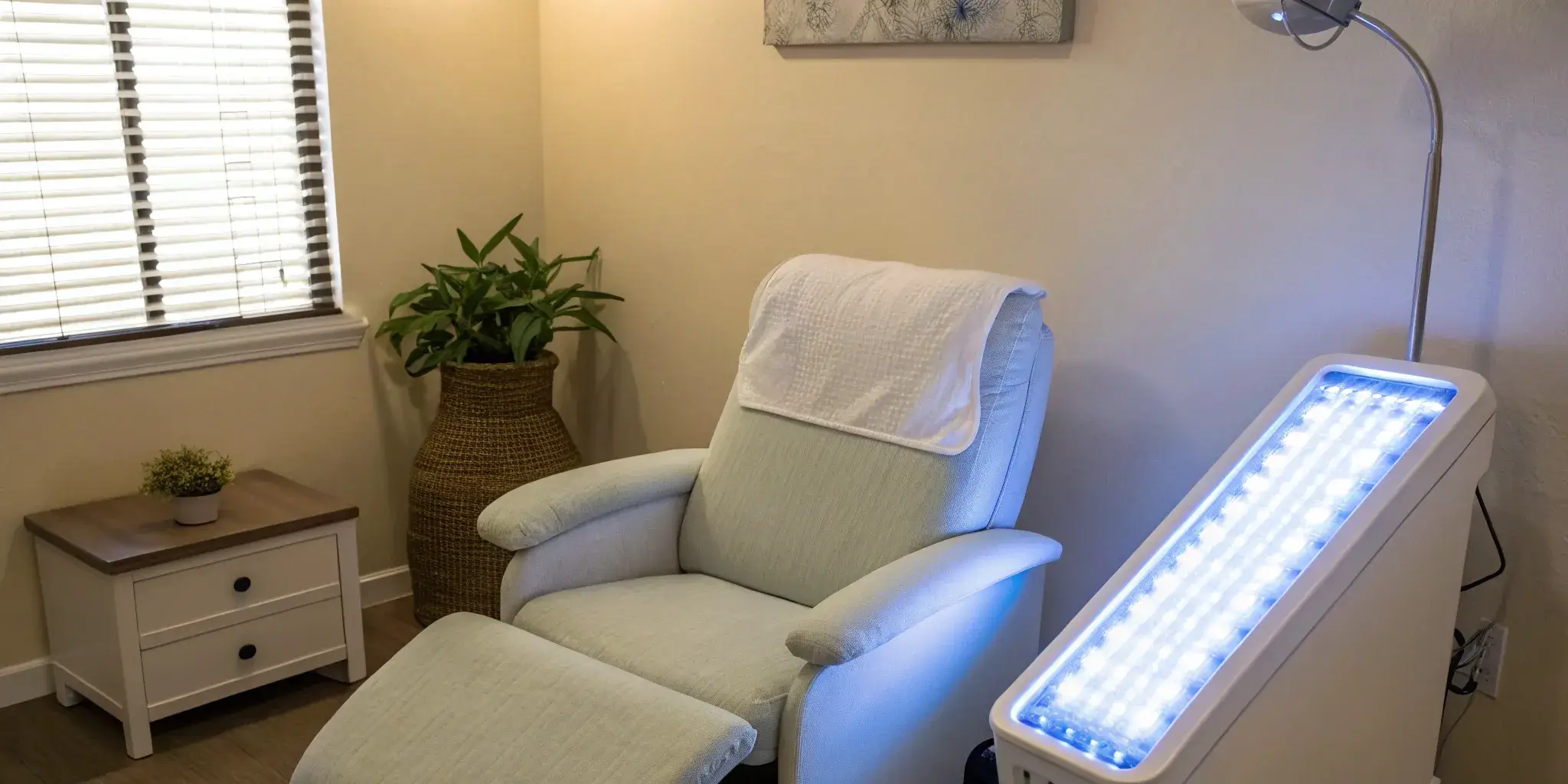
You have options for where you receive your phototherapy, and you can work with your doctor to decide what’s best for you. In-clinic treatments offer the benefit of direct medical supervision for every session. However, home-based phototherapy can be just as effective and offers a level of convenience that many people appreciate. Being able to do your treatments on your own schedule makes it much easier to stick with the plan. With the right guidance and an FDA-cleared device, you can safely and effectively manage your condition from the comfort of your own home.
Are There Side Effects or Risks?
It’s smart to ask about the potential side effects of any medical treatment. Like any therapy, narrowband phototherapy has potential risks, but it’s generally considered a safe and effective option when administered correctly. The key is working with a care provider who can create a personalized treatment plan and monitor your progress. Most side effects are mild, temporary, and manageable. Understanding them ahead of time helps you know what to expect and how to keep your skin healthy and safe throughout your treatment journey.
We’ll walk through the most common short-term reactions you might notice, the long-term safety considerations to be aware of, and the single most important step you must take to protect your eyes during every single session.
Common Short-Term Skin Reactions
The most common side effects of narrowband phototherapy are temporary and feel a lot like a mild sunburn. During your treatment, you might notice some redness or pinkness in the treated areas, which typically shows up 8 to 14 hours after a session and fades within a day. Your skin may also feel a bit itchy or dry. Using a good moisturizer can help manage this.
Occasionally, your skin condition might seem to get a little worse before it gets better. This is usually a temporary phase. If your skin becomes uncomfortable, your provider will simply pause treatment until it calms down. This is a normal part of the process as your doctor finds the perfect phototherapy dose for your skin.
Long-Term Safety Considerations
A common question is whether phototherapy increases the risk of skin cancer. It’s a valid concern, since the treatment uses UV light. While any exposure to UV light carries a theoretical risk over a lifetime, studies have not shown a direct link between narrowband UVB therapy and an increased rate of skin cancer.
This is one of the main reasons narrowband UVB is often preferred over older treatments like broadband UVB or PUVA. To be safe, your doctor will recommend regular skin checks as part of your long-term care. Following your prescribed treatment schedule and avoiding overexposure are the best ways to ensure your light therapy for psoriasis or another condition remains a safe option for years to come.
Essential Safety: Protecting Your Eyes
This part is non-negotiable: You must protect your eyes during every treatment. You will be provided with special UV-blocking goggles, and it is critical to wear them for the entire time the light is on. Without them, the UV light can cause a painful, sunburn-like reaction on the surface of your eyes.
Failing to wear proper eye protection can also increase your risk of developing cataracts later in life. This is a completely avoidable risk. The safety goggles are designed to block the specific wavelengths of UVB light used in your treatment while still allowing you to see. Think of it as the most important rule of phototherapy—it’s a simple step that ensures your eyes stay safe and healthy.
How Does It Compare to Other Treatments?
If you’re exploring light therapy, you’ve probably come across a few different names and acronyms. It can be confusing to sort through the options and understand how they stack up. Narrowband UVB phototherapy is just one of several light-based treatments, and it stands apart from older methods and topical creams in a few important ways. Knowing the differences can help you and your doctor decide on the best path forward for your health.
Narrowband vs. Broadband UVB: What’s the Difference?
Think of narrowband UVB as a more refined and targeted version of older light therapies. While both use ultraviolet B light, they aren’t the same. Broadband UVB uses a wide range of UV light wavelengths. In contrast, narrowband UVB therapy uses a very specific, small sliver of the light spectrum—between 308 and 312 nanometers. Research has shown this precise range is the most beneficial for treating various skin and autoimmune conditions. By concentrating the light energy into this therapeutic window, narrowband phototherapy can deliver positive results more efficiently and with less exposure to less-effective or potentially harmful wavelengths.
Narrowband Phototherapy vs. PUVA
PUVA is another type of phototherapy that combines a photosensitizing medication called psoralen with UVA light exposure. While it can be effective, PUVA comes with more significant safety concerns. A key advantage of narrowband UVB is its strong safety profile. Unlike PUVA, narrowband UVB therapy has not been linked to an increased risk of skin cancer, making it a much safer alternative for long-term management of chronic conditions. This distinction is incredibly important for anyone needing consistent, ongoing treatment to keep their symptoms under control without introducing other health risks down the line.
An Alternative to Topical Medications
For many people with conditions like eczema or psoriasis, the first line of defense is usually a cream or ointment. But topicals don’t always provide the relief needed, and they can be messy and time-consuming to apply. When these treatments aren’t enough, narrowband UVB is often recommended as the next step. It works systemically to calm the overactive immune response that causes symptoms. Clinical studies have shown that phototherapy can significantly reduce the severity of skin inflammation, offering a practical and effective option when creams and lotions have fallen short.
Is Narrowband Phototherapy Right for You?
Deciding to try a new treatment is a big step, and it’s natural to wonder if it’s the right fit for your health journey. Narrowband phototherapy isn’t a one-size-fits-all solution, but for many people dealing with persistent autoimmune and skin conditions, it can be a game-changer. The best way to find out is by looking at who benefits most, understanding the medical process, and seeing where it fits in your overall treatment plan. This approach helps you and your doctor make an informed decision together.
Who Is an Ideal Candidate?
Narrowband UVB phototherapy is a highly effective treatment for a variety of skin conditions, including psoriasis, eczema, and vitiligo. It’s often a great option for people who haven’t seen the results they want from topical treatments like creams and ointments. But its benefits can go more than skin deep. Because it works by calming the immune system and reducing inflammation, it’s also being explored as one of several innovative treatment options for systemic autoimmune conditions. If you’re dealing with persistent inflammation and are looking for a therapy that addresses the immune response directly, you could be an ideal candidate for this treatment.
Why You Need a Medical Evaluation and Prescription
You might see lights for sale online, but it’s essential to understand that phototherapy is a medical treatment that requires a prescription and professional guidance. A thorough evaluation from your healthcare provider is the first step to determine if it’s appropriate and safe for you. They will consider your specific condition, medical history, and any other medications you’re taking. This isn’t just a formality; it’s about ensuring your safety and creating a treatment plan that’s tailored to your body’s needs. Think of your doctor as your partner in this process, helping you get the best possible results while minimizing any risks.
An Option When Other Treatments Haven’t Worked
For many, the path to finding relief can be long and frustrating. Narrowband UVB phototherapy is often considered when other approaches, like topical medications or even systemic therapies, haven’t provided the relief you need. It works differently by using a specific wavelength of light to reduce inflammation, promote skin repair, and calm overactive immune responses at the source. Many people who felt stuck with their symptoms experience significant improvements in their condition and overall quality of life after a series of treatments. If you feel like you’ve hit a wall with your current regimen, phototherapy could be a powerful and effective next step.
Clearing Up Common Misconceptions
It’s natural to have questions when you’re considering a new treatment. When it comes to narrowband phototherapy, there’s a lot of information out there, and some of it can be confusing. Let’s clear the air and address some of the most common myths so you can have a more informed conversation with your doctor. We’ll separate fact from fiction to give you a clearer picture of how this therapy works and what you can realistically expect from these innovative treatment options.
Myth: It’s the Same as a Tanning Bed
This is one of the biggest misconceptions we hear. While both involve light, comparing a medical phototherapy device to a tanning bed is like comparing a prescription medication to a random supplement you find online. Tanning beds emit a broad spectrum of UV light, primarily UVA, which is linked to skin aging and a higher risk of skin cancer. Narrowband UVB phototherapy, on the other hand, uses a very precise and targeted wavelength of light (311-313 nm) that has been studied for its ability to calm the immune system and reduce inflammation. It’s a prescribed, provider-guided treatment that can even be done safely at home with the right equipment and medical oversight.
Myth: Insurance Won’t Cover It
The cost of medical care is a valid concern for everyone, and many people assume a treatment like at-home phototherapy won’t be covered. The reality is that many insurance plans do cover home phototherapy devices when they are prescribed by a healthcare provider. Often, coverage is approved after you’ve tried other first-line treatments without success. The best first step is to talk with your doctor about whether a prescription is right for you. From there, you can work with your insurance company to understand your specific coverage for at-home light therapy.
Myth: It’s Not a Safe Long-Term Option
Any effective medical treatment comes with potential side effects, and it’s smart to ask about long-term safety. With narrowband UVB phototherapy, the side effects are typically mild and manageable, like temporary redness or itching similar to a slight sunburn. When administered correctly under the guidance of a healthcare provider, it has a strong safety profile. Following your prescribed treatment schedule—including the duration and frequency of each session—is key to minimizing risks. This careful, controlled approach is what makes it a viable option for managing chronic conditions over time.
Related Articles
- Phototherapy – Safe & Effective Treatment for Psoriasis & Eczema
- Home Phototherapy – Cytokind
- Clinical NB-UVB Phototherapy: Advanced Care
- How UVB Phototherapy Works and Starting Steps – Cytokind
- Safe NB-UVB Phototherapy Devices for Home & Clinical Use
Frequently Asked Questions
How long does it take to see results with narrowband phototherapy? This is a great question, and the honest answer is that it varies from person to person. While some people start to notice improvements in their skin or a reduction in itching within a few weeks, it’s more common to see significant changes after one to two months of consistent treatment. The key is sticking to the schedule your doctor prescribes, as the positive effects build up over time.
Is the treatment painful? No, the treatment itself shouldn’t be painful at all. During a session, you might feel a gentle warmth on your skin, but that’s it. The most common side effect is some temporary pinkness or redness, similar to a very mild sunburn, that can appear several hours later. This is actually a sign that the treatment is working, and your provider will use this response to fine-tune your treatment dose so you stay comfortable.
Why can’t I just get the same benefits from sitting in the sun? While sunlight does contain UVB rays, it also contains a wide mix of other UV light, including UVA rays that are more associated with skin damage and aging. Think of narrowband phototherapy as a targeted dose of only the most helpful part of sunlight. It isolates the specific wavelength that calms inflammation and helps the skin heal, giving you the therapeutic benefits without the extra, unnecessary exposure.
Can I use narrowband phototherapy while taking other medications? This is an important question and highlights why working with a healthcare provider is essential. You should always discuss all your medications—both prescription and over-the-counter—with your doctor before starting phototherapy. Some medications can make your skin more sensitive to light, and your doctor needs to know this to create a safe and effective treatment plan for you.
Do the results last forever once I stop treatment? Narrowband phototherapy is an incredibly effective way to manage the symptoms of chronic autoimmune conditions, but it isn’t a cure. For many people, it can lead to a long period of remission where symptoms are gone or greatly reduced. Depending on your condition, your doctor may recommend a maintenance schedule with less frequent treatments to keep your skin clear and prevent flare-ups.